
Shear Strengthening of Existing Concrete Structures: Extending Asset Life with Modern Solutions
Learn how modern shear strengthening and post-installed reinforcement solutions help extend the life of existing concrete structures, improve structural performance, address punching shear, and support sustainable rehabilitation projects.
Why Shear Strengthening Matters
Across India and around the world, owners and engineers are increasingly faced with a common challenge: how to safely extend the life of existing structures while meeting evolving performance demands.
Many reinforced concrete (RC) buildings, bridges, industrial facilities, and infrastructure assets were designed decades ago under different loading requirements and design standards. Today, these structures may need to accommodate increased loads, comply with updated codes, improve seismic performance, or address deterioration caused by aging and environmental exposure.
While flexural strengthening often receives significant attention, shear deficiencies can be equally critical. Unlike flexural failures, shear failures are typically sudden and brittle, occurring with little warning. Identifying and addressing shear-related vulnerabilities is therefore essential for maintaining structural safety, serviceability, and long-term performance.
Rather than opting for demolition and reconstruction, many project teams are turning to retrofit and strengthening solutions that preserve existing assets while improving structural capacity and resilience.
Understanding Shear Deficiency in Existing Structures
Shear forces develop within structural elements such as beams, slabs, walls, foundations, and bridge components. When the existing concrete and reinforcement are unable to resist these forces, diagonal cracking can occur, potentially leading to rapid structural failure.
Common reasons for shear deficiencies include:
Increased service loads due to change of use
Addition of new floors, equipment, or structural elements
Corrosion and deterioration of existing reinforcement
Seismic retrofitting requirements
Design deficiencies in older structures
Revision of design codes and safety standards
Aging infrastructure approaching the end of its original design life
In many rehabilitation projects, strengthening becomes necessary not only to restore lost capacity but also to enhance structural performance for future demands.
The Shift from Replacement to Retrofit
The construction industry is increasingly embracing retrofit solutions as a practical alternative to demolition and reconstruction.
Strengthening existing concrete structures can significantly reduce construction time, material consumption, operational disruption, and embodied carbon compared to building new structures. By retaining much of the existing structure, owners can improve performance while maximizing the value of their original investment.
For engineers, the challenge lies in selecting strengthening methods that deliver structural reliability while remaining efficient to design and install.
Modern Approaches to Shear Strengthening
Traditional strengthening techniques such as concrete jacketing, steel plate bonding, and section enlargement remain effective solutions. However, these methods often involve:
Extensive demolition and surface preparation
Increased member dimensions and self-weight
Longer construction schedules
Significant disruption to building occupants or operations
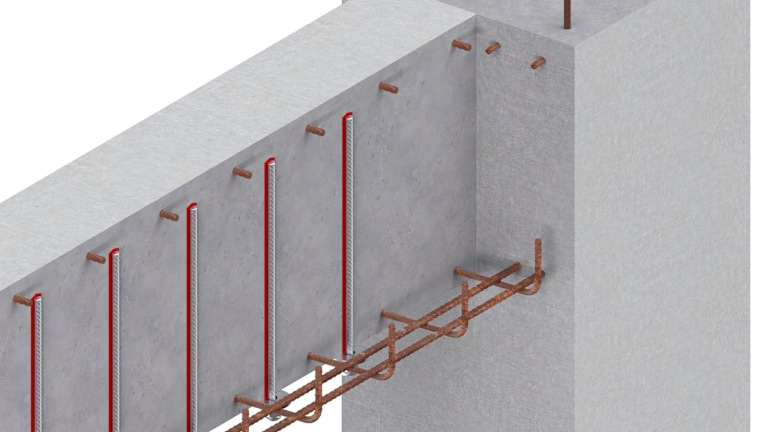
To address these challenges, modern retrofit projects increasingly utilize post-installed reinforcement systems that integrate new reinforcement into existing concrete using advanced adhesive technologies and engineered design methodologies.
These solutions create structural continuity between existing and new concrete elements while minimizing intrusive construction work.
Applications include:
Shear strengthening of beams
Slab strengthening and rehabilitation
Structural modifications and extensions
Foundation upgrades
Bridge rehabilitation and overlays
Column strengthening and jacketing
Addressing Punching Shear in Flat Slabs
Punching shear is one of the most critical failure mechanisms in flat slab construction. It occurs when concentrated loads around columns exceed the slab's punching shear resistance, potentially resulting in localized collapse.
Traditional strengthening methods can be difficult to execute, particularly in occupied buildings where access and downtime are limited.
Post-installed punching shear reinforcement provides a practical alternative. Installed from the underside of the slab, the solution enables strengthening without major demolition or disruption to the structure above. The reinforcement works similarly to cast-in punching shear reinforcement, enhancing load transfer around column connections, and improving overall structural capacity.
This approach is particularly valuable in refurbishment projects where maintaining operational continuity is a key project requirement.
Engineering Confidence Through Design and Verification
Successful strengthening projects require more than installation of products alone. Structural assessment, design verification, and code compliance are critical components of any retrofit strategy.
Modern engineering tools allow designers to evaluate existing conditions, assess deficiencies, and develop strengthening solutions that align with current design standards. Digital design platforms can help engineers analyze reinforcement requirements, calculate structural capacity, and optimize retrofit solutions for both static and seismic loading conditions.
By combining proven installation systems with engineering-led design workflows, retrofit projects can be delivered with greater confidence, efficiency, and transparency.
A Sustainable Path Forward
As sustainability becomes a priority across the construction industry, extending the service life of existing structures has become one of the most effective ways to reduce environmental impact.
Retrofitting and strengthening existing assets can:
Reduce demolition waste
Lower embodied carbon
Minimize consumption of new construction materials
Reduce project downtime and disruption
Preserve valuable infrastructure and building stock
For many structures, rehabilitation is not only an engineering decision—it is also an environmental and economic one.
Conclusion
Shear strengthening plays a vital role in modern structural rehabilitation. Whether the objective is increasing load capacity, addressing punching shear deficiencies, improving seismic resilience, or extending the life of aging infrastructure, today's post-installed reinforcement solutions provide engineers with practical and efficient options for strengthening existing concrete structures.
By combining advanced fastening technologies, post-installed reinforcement systems, and engineering-based design methodologies, existing structures can continue to perform safely and reliably for decades to come delivering greater value, improved sustainability, and enhanced resilience without the need for complete replacement.